


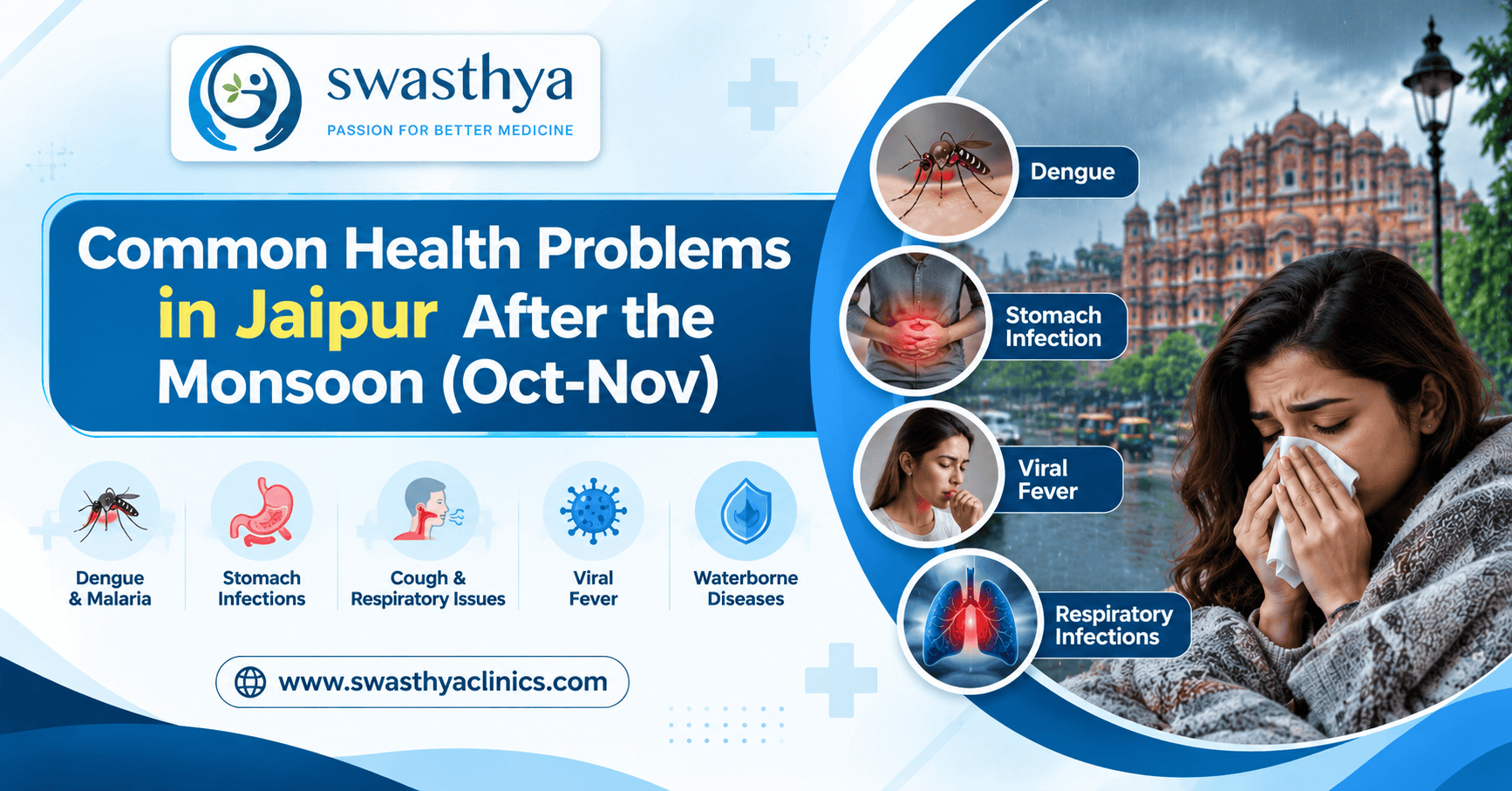
Common Health Problems In Jaipur After The Monsoon
- Admin
- Sep 29, 2026
The rain has slowed down, but October and November in Jaipur are not "safe" months yet. Afternoons are still warm, while mornings and nights start turning cool. Water still stands in coolers, plant trays and drains. Then the festival season brings crowds, sweets, dust and smoke.
Every year we see the same pattern in the clinic: fever, cough, body pain, allergies and breathing trouble rise sharply in these two months. The good news is that most of it can be prevented if you prepare before the season peaks. This guide is based on what people ask us most often at the Best General Physician in Jaipur.
Quick Answer: Why Do People Fall Sick More in October and November?
Three things overlap in these months:
- Mosquitoes are still breeding in leftover monsoon water, so dengue, malaria and chikungunya cases continue.
- The day-night temperature gap stresses the body and lowers immunity, which helps viruses spread.
- Dust, pollen and festival smoke irritate the nose, throat and lungs, triggering allergies and asthma.
Common Health Problems in October-November
1. Dengue, malaria and chikungunya: Dengue often peaks just after the rains, not during them. Watch for sudden high fever, severe body and joint pain, pain behind the eyes, rash and extreme tiredness. Malaria causes fever with chills, and chikungunya causes joint pain that can last weeks.
2. Viral fever and flu: Fever, body ache, sore throat, runny nose and weakness are common when nights turn cool. Most viral fevers settle in 3 to 5 days, but fever with severe pain, rash or vomiting should not be assumed to be "just viral."
3. Cold, cough and throat infection: Cold drinks, ice cream and temperature swings, together with dust, cause sore throat and lingering cough.
4. Seasonal allergies: After the rains, grass and weed pollen, dust and mould rise. This shows up as sneezing, itchy eyes, blocked nose and skin rashes.
5. Asthma flare-ups: Cool air, pollen, dust and firecracker smoke can trigger wheezing, chest tightness and night-time cough, even in people who were fine all summer.
6. Typhoid, jaundice and stomach infections: Contaminated water and street food remain a risk. Symptoms include prolonged fever, stomach pain, vomiting, loose motions, and yellow eyes or urine.
7. Eye and skin problems: Conjunctivitis (red, watery eyes) and fungal skin infections continue to spread in humid, crowded places.
What to Prepare Before October Begins
Protect your home from mosquitoes
- Empty and scrub coolers, buckets, flower pots, water trays and old tyres at least once a week. Mosquito eggs stick to walls, so scrubbing matters and not just draining.
- Cover water tanks and fix leaking taps.
- Use mosquito nets, repellents and window screens, and wear full-sleeve clothes at dawn and dusk.
Keep a basic health kit ready
- A digital thermometer, ORS sachets, paracetamol (as advised by your doctor), and your regular medicines with at least a 2-week backup.
- Your doctor's number and the nearest lab and hospital saved in your phone.
Protect your immunity
- Sleep 7 to 8 hours and eat fresh, home-cooked food with fruits, vegetables and protein.
- Drink clean, boiled or filtered water, and avoid cut fruit and open street food.
- Ask your doctor about the annual flu vaccine, ideally before the cool season sets in, especially for children, people above 60 and those with chronic illness.
Adjust your daily routine to the changing weather
- Carry a light jacket or shawl for early mornings and late evenings.
- Avoid very cold drinks and ice cream if you are prone to sore throat or cough.
- Dry your clothes fully and keep your feet dry.
If You Have a Long-Term Condition, Prepare Earlier
Diabetes: Infections push blood sugar up, and festival sweets make control harder. If you are looking for a Diabetes Doctor in Jaipur, book a review before Diwali. Get your HbA1c and fasting sugar checked, confirm your medicine doses, and plan festival meals in advance instead of going off-track for a week. Also inspect your feet daily, since small cuts heal slowly.
Blood pressure: Festival food is often high in salt, and cooler weather can raise BP. Check it at home regularly and never skip tablets because you "feel fine."
Asthma and allergies:
- Refill your inhaler and check that it is not expired.
- Keep your reliever inhaler with you at all times, and take your controller medicine regularly as prescribed.
- Keep windows closed during peak dust or smoke hours, and use a mask outdoors.
- Wash bedsheets and pillow covers in hot water, and clean fans and curtains before the season.
Older adults and children: They tire and dehydrate faster and can worsen quickly. See a doctor early instead of waiting for symptoms to worsen.
Diwali and Festival Season: Extra Precautions
- Firecracker smoke is a major trigger for asthma, allergies and cough. Keep children and elderly people away from smoke, and avoid bursting crackers in closed lanes.
- Sweets and fried food can raise sugar, weight and acidity. Eat in small portions and prefer fresh, home-made items.
- Crowded places spread viral infections. Wash hands, and keep a mask handy if you have a cough or cold.
- Keep a doctor's contact available, since clinics may have changed timings during festival days.
Home Care vs Doctor Care: Fever Guide
Manageable at home (for a day or two): mild fever, light cold, mild cough. Rest, drink plenty of fluids (water, ORS, soups, coconut water) and eat light food.
Consult Dr. Rahul Mathur if:
- fever lasts more than 2 to 3 days or goes above 102°F
- there is severe body pain, rash, or pain behind the eyes
- there is repeated vomiting, severe stomach pain or diarrhoea
- there is breathing difficulty, chest pain, confusion or extreme drowsiness
- a baby under 3 months has any fever
Important: if dengue is a possibility, do not take aspirin or ibuprofen on your own, as they can increase bleeding risk. Get tested and take medicines only as your doctor advises.
Dengue warning signs needing urgent hospital care: severe stomach pain, persistent vomiting, bleeding from gums or nose, black stools, extreme weakness, restlessness, or cold, clammy skin.
Frequently Asked Questions
Which health problems are most common in Jaipur in October and November?
Dengue, malaria, viral fever, cold and cough, seasonal allergies, asthma flare-ups and stomach infections are the most common.
Is dengue still a risk after the monsoon ends?
Yes. Mosquitoes keep breeding in leftover water, and dengue cases often rise in the weeks after the rains. Keep taking precautions until the weather turns properly cold.
How do I know if it is a viral fever or dengue?
It is hard to tell from symptoms alone. Dengue usually brings severe body and joint pain, pain behind the eyes and sometimes a rash. A doctor's examination and blood tests confirm it.
Should I take a flu vaccine before winter?
The flu vaccine is generally recommended before the cool season, especially for older adults, young children, pregnant women and people with diabetes, asthma or heart disease. Ask your doctor what suits you.
How can I protect myself from Diwali smoke?
Avoid smoky areas, keep windows closed at peak times, wear a mask outdoors, and keep your inhaler and medicines handy if you have asthma or allergies.
What should diabetic patients do before the festival season?
Get a sugar check-up, review medicines with your doctor, plan portions for sweets, stay hydrated and do not skip walks or medicines.
When Should You Get a Check-Up Before the Season Starts?
If you have wheezing, night-time cough, repeated sneezing or breathlessness every time the season changes, do not wait for the next attack. Consult an Asthma Specialist in Jaipur in September or early October for lung tests, trigger identification and a long-term control plan, instead of depending on repeated cough syrups or steroid courses on your own.
Prepare Early with Swasthya Clinic
Preparing a few weeks early is the easiest way to avoid a bad October. Whether you need a pre-season check-up, a fever evaluation or a review of your sugar, BP or asthma medicines, Dr. Rahul Mathur and the team at Swasthya Clinic, a trusted Medical Clinic in Jaipur, are here to help patients of all ages.
Disclaimer: This article is for general awareness and does not replace medical advice. Please consult Dr. Rahul Mathur for diagnosis and treatment.