


Diabetes Vs Prediabetes: What's The Difference?
- Admin
- Jul 31, 2026
Ever got a blood sugar report that said "borderline" and walked away not knowing if you should panic or shrug it off? You're not alone. Every week, patients walk into our clinic holding a lab report, unsure whether they have diabetes or just a "warning sign." This confusion is completely understandable — prediabetes and diabetes are related, but they are not the same thing, and knowing the difference can genuinely change the course of your health.
In this blog, we'll break down what separates prediabetes from diabetes, how each is diagnosed, what symptoms to watch for, and — most importantly — what you can do about it starting today.
What Is Prediabetes?
Prediabetes is a condition where your blood sugar levels are higher than normal, but not high enough to be officially classified as type 2 diabetes. Think of it as a warning light on your car's dashboard — it's telling you something needs attention before a bigger problem develops.
The good news? Prediabetes is often reversible. With the right lifestyle changes and, in some cases, medical guidance, many people bring their blood sugar back to a normal range and avoid developing full-blown diabetes altogether.
Why Prediabetes Happens
Prediabetes usually develops when your body starts becoming resistant to insulin — the hormone responsible for moving sugar from your bloodstream into your cells for energy. When your cells stop responding properly to insulin, sugar builds up in the blood instead of being used efficiently. Common contributing factors include:
- Excess body weight, especially abdominal fat
- Sedentary lifestyle with little physical activity
- Family history of diabetes
- Age above 45
- Poor sleep patterns and chronic stress
- Unhealthy eating habits, especially high sugar and refined carbohydrate intake
What Is Diabetes?
Diabetes, most commonly type 2 diabetes, is a chronic condition where blood sugar levels remain consistently high because the body either doesn't produce enough insulin or can't use it effectively. Unlike prediabetes, diabetes doesn't just go away with a few lifestyle tweaks — it requires ongoing management, and in many cases, medication.
Left unmanaged, diabetes can lead to serious complications affecting the heart, kidneys, eyes, nerves, and blood vessels. This is why early detection and consistent care matter so much.
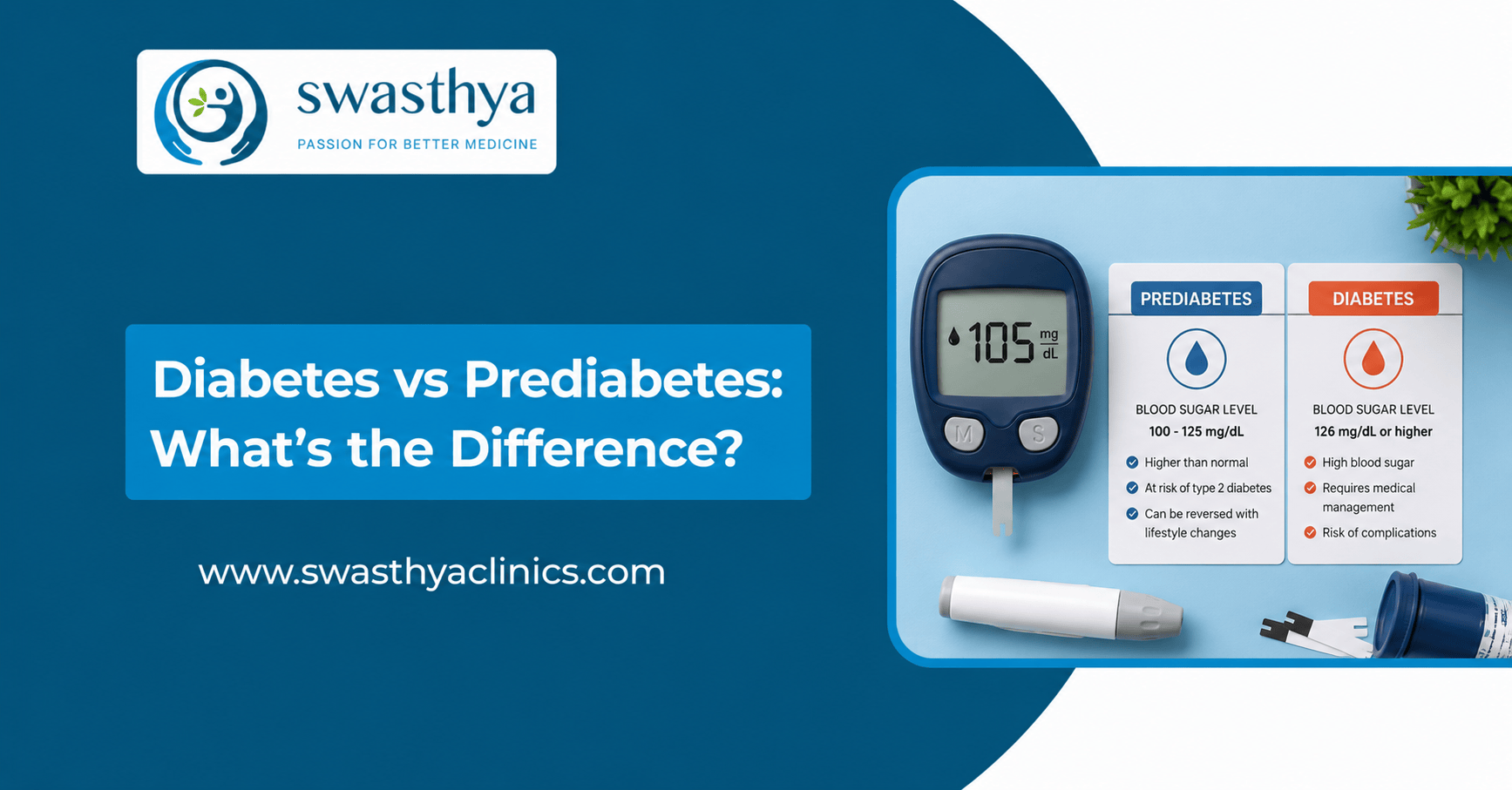
Diabetes vs Prediabetes: The Key Difference (Blood Sugar Numbers)
The clearest way to understand the difference is through blood sugar test results. Here's a general comparison used by doctors:
| Test | Normal | Prediabetes | Diabetes |
|---|---|---|---|
| Fasting Blood Sugar | Below 100 mg/dL | 100–125 mg/dL | 126 mg/dL or higher |
| HbA1c (3-month average) | Below 5.7% | 5.7%–6.4% | 6.5% or higher |
| Oral Glucose Tolerance Test (2-hr) | Below 140 mg/dL | 140–199 mg/dL | 200 mg/dL or higher |
Important note: These numbers are general reference ranges. Your individual results should always be interpreted by a qualified doctor, since factors like age, other health conditions, and lab methodology can affect the reading.
Symptoms: Why Prediabetes Often Goes Unnoticed
One of the biggest differences between the two conditions is how they feel.
Prediabetes usually has no noticeable symptoms. This is exactly why it's called a "silent" condition — most people find out only through a routine blood test, which is why regular health checkups matter even when you feel perfectly fine.
Diabetes, on the other hand, often comes with recognisable warning signs, such as:
- Frequent urination, especially at night
- Excessive thirst and dry mouth
- Unexplained fatigue
- Blurred vision
- Slow-healing wounds or cuts
- Unintentional weight loss
- Tingling or numbness in hands and feet
If you're experiencing any of these symptoms, it's worth getting tested rather than waiting it out.
Can Prediabetes Be Reversed?
Yes — and this is the most important message to take away from this blog. Prediabetes is not a life sentence. With consistent effort, many people bring their blood sugar levels back to normal. Here's what genuinely works, based on both clinical evidence and what we see in our patients:
- Move your body daily. Even a 30-minute brisk walk, five days a week, significantly improves insulin sensitivity.
- Cut down on refined carbs and sugary drinks. Replace white rice, maida, and sugary beverages with whole grains, fibre-rich vegetables, and water.
- Lose even 5–7% of your body weight. Research consistently shows this modest weight loss can meaningfully lower diabetes risk.
- Prioritise sleep. Poor sleep directly affects insulin function and hunger hormones.
- Manage stress. Chronic stress raises cortisol, which in turn raises blood sugar.
- Get tested regularly. If you have risk factors — family history, obesity, or a sedentary job — don't wait for symptoms. An annual blood sugar check is a small habit with a big payoff.
Can Diabetes Be Reversed Too?
Type 2 diabetes is generally described as "managed" rather than "cured," but many patients — especially those diagnosed early — can achieve excellent blood sugar control and even reduce their dependence on medication through disciplined lifestyle changes combined with proper medical treatment. This is why early diagnosis matters so much: catching things at the prediabetes stage gives you far more room to reverse course.
When Should You See a Doctor?
You should get your blood sugar checked if:
- You are above 45 years of age
- You are overweight or obese
- You have a family history of diabetes
- You had gestational diabetes during pregnancy
- You lead a largely sedentary lifestyle
- You're experiencing any of the symptoms mentioned above
Don't wait for symptoms to show up — by the time diabetes symptoms become obvious, the condition has often been present for a while already.
Expert Insight from Dr. Rahul Mathur
"In my 12+ years of clinical practice, I've seen that the biggest difference between a patient who reverses prediabetes and one who progresses to full diabetes is simply awareness and consistency. Prediabetes is your body's way of giving you a second chance. The patients who get their sugar tested regularly, make small but consistent lifestyle changes, and stay in touch with their doctor almost always do better in the long run. Please don't ignore a 'borderline' report — treat it as your cue to act, not as something to worry about later." — Dr. Rahul Mathur, MBBS (Gold Medalist), General Physician with Special Interest in Geriatrics, Swasthya Clinic, Jaipur
Why Choose Swasthya Clinic for Diabetes Care in Jaipur
If you're searching for a trusted Diabetes Doctor in Jaipur, Dr. Rahul Mathur at Swasthya Clinic has over 12 years of experience helping patients manage and even reverse early-stage blood sugar problems. Whether you've just received a borderline report or have been living with diabetes for years, our approach focuses on personalised, practical care — not just prescriptions.
Our Diabetes Treatment in Jaipur includes:
- Thorough evaluation with fasting, postprandial, and HbA1c testing
- Personalised diet and lifestyle guidance based on your daily routine
- Medication management tailored to your health profile
- Regular monitoring to track progress and adjust treatment
- Guidance for related conditions like high BP, thyroid, and obesity, which often accompany diabetes
Final Thoughts
Prediabetes and diabetes exist on the same spectrum, but they call for very different levels of urgency and treatment. Prediabetes is a warning — and often a reversible one. Diabetes is a chronic condition that needs consistent, long-term management. The single most powerful thing you can do for your health is to know your numbers and act early.
If it's been a while since your last blood sugar test, or if you have any of the risk factors mentioned above, don't wait. Book a consultation with Dr. Rahul Mathur at Swasthya Clinic, Jaipur, and take the first step toward keeping your blood sugar — and your future — in control.
Frequently Asked Questions
1. Is prediabetes the same as type 2 diabetes?
No. Prediabetes means your blood sugar is higher than normal but hasn't crossed the threshold for a diabetes diagnosis. It's an early warning stage, and unlike diabetes, it can often be reversed with lifestyle changes.
2. Can prediabetes turn into diabetes if untreated?
Yes, if left unmanaged, prediabetes can progress to type 2 diabetes over time, especially in the presence of obesity, poor diet, and inactivity.
3. What is a normal HbA1c level?
An HbA1c below 5.7% is considered normal, 5.7%–6.4% indicates prediabetes, and 6.5% or above suggests diabetes. Your doctor will interpret this alongside other tests.
4. How often should I get tested if I have risk factors?
If you have a family history of diabetes, are overweight, or are above 45, an annual blood sugar test is generally recommended — though your doctor may suggest more frequent testing based on your individual risk.
5. Where can I get accurate diabetes testing and treatment in Jaipur?
Swasthya Clinic, led by Dr. Rahul Mathur, offers comprehensive diabetes screening and treatment in Jaipur, with a focus on personalised care for both prediabetes and diabetes patients.